
Virginia Woolf: The Memories and Echoes of English

The Dialectic of Enlightenment by Virginia Woolf was first published in 1900 and was a landmark in English literature. The book took English Literature to new heights with its powerful language, profound metaphor, and literary allusions. Its impact was universal.
The author Virginia Woolf took the most basic vocabularies and constructed them into complex structures that made it all seem extremely rich, complicated, and intricate. The author created an entirely new vocabulary for her readers that changed the very definition of English.
During a radio appearance in 1929, Virgina Woolf said the following about words:
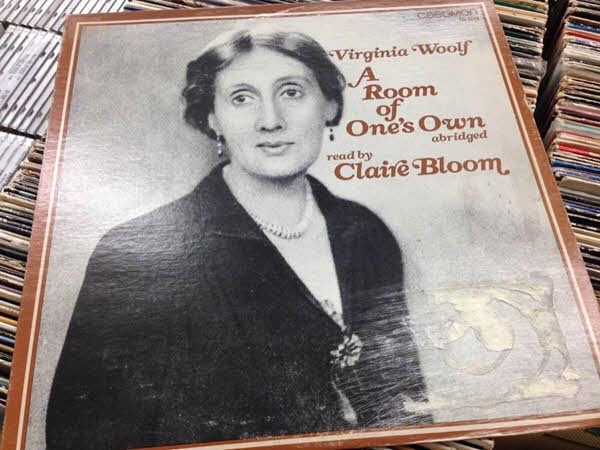
“Words, English words, are full of echoes, of memories, of associations – naturally. They have been out and about, on people’s lips, in their houses, in the streets, in the fields, for so many centuries. And that is one of the chief difficulties in writing them today – that they are so stored with meanings, with memories, that they have contracted so many famous marriages.”
Read more: The only surviving recording of Virginia Woolf
Virginia’s “echoes, memories” and “associations” are now better known as connotations, and each person will have a different view or opinion on what these connotations are. The word field (see previous quote) will be assigned associations differently by different people. A farmer may think of ‘fields’ in terms of crops or grazing animals, while someone who has lived their whole life in the city may think of green grass and open space.
If we really want to know word, we must also take care to understand these connotations in the way that they are shared between native speakers. What is a meadow or a pasture and what makes them so different?
Collocations: Echoes, Memories & Associations
“It is a very obvious but always mysterious fact that a word is not a single and separate entity: it is part of other words… words belong to each other”.
Here she smartly captures the interdependence of words, and that understanding a phrase means not simply knowing its connotations but knowing the words that it generally occurs with – its collocations.
So it follows that knowing a word is also knowing it has different meanings when combined with other words. Think of the difference in meaning between field trip, gas field, magnetic field, and soccer field, for example.

Semantic Networks
“[Words] are the wildest, freest, maximum irresponsible, most unteachable of all matters. Of path, you could seize them and kind them and area them in alphabetical order in dictionaries. but words do no longer stay in dictionaries: they live within the thoughts. … and the way do they stay within the thoughts? Variously and unusually, lots as human beings stay, ranging hither and thither, falling in love, assembly collectively.”

A third function of word know-how that Woolf identifies is the way that this know-how is organised into semantic networks.
The kind that are way more convoluted than the exceedingly limited world-list in your favourite ESL textbook.
It’s all about context
“[They do not] like being lifted on the point of a pin and tested one after the other. They hang together in sentences, paragraphs, from time to time whole pages at a time”.

It was clearly evident to Woolf, long before linguists had documented and studied it, that words are context sensitive. As English teachers will happily attested to, trying to teach vocabulary out of context can often be futile.
Words seem to fight against definition and classification. Language is constantly evolving as new users change and adapt their words to suit their individual needs and situations.
“In brief they hate some thing that stamps them with one meaning or confines them to one mind-set. For what is their nature, however exchange. perhaps this is their maximum hanging peculiarity – their need of change. that is because the fact they are seeking to seize is many-sided, and they bring about it through being many-sided, dashing first this manner then that, saying one issue to at least one individual, some other factor to any other individual…”
And here lies the challenge for us, both as learners and as teachers.
Let us not forget of course that while new words form new meanings, old meanings are not instantly lost. Take the words of Virginia herself, still as powerful today as they were on that day in 1929.